Containment that protects the rest of the property
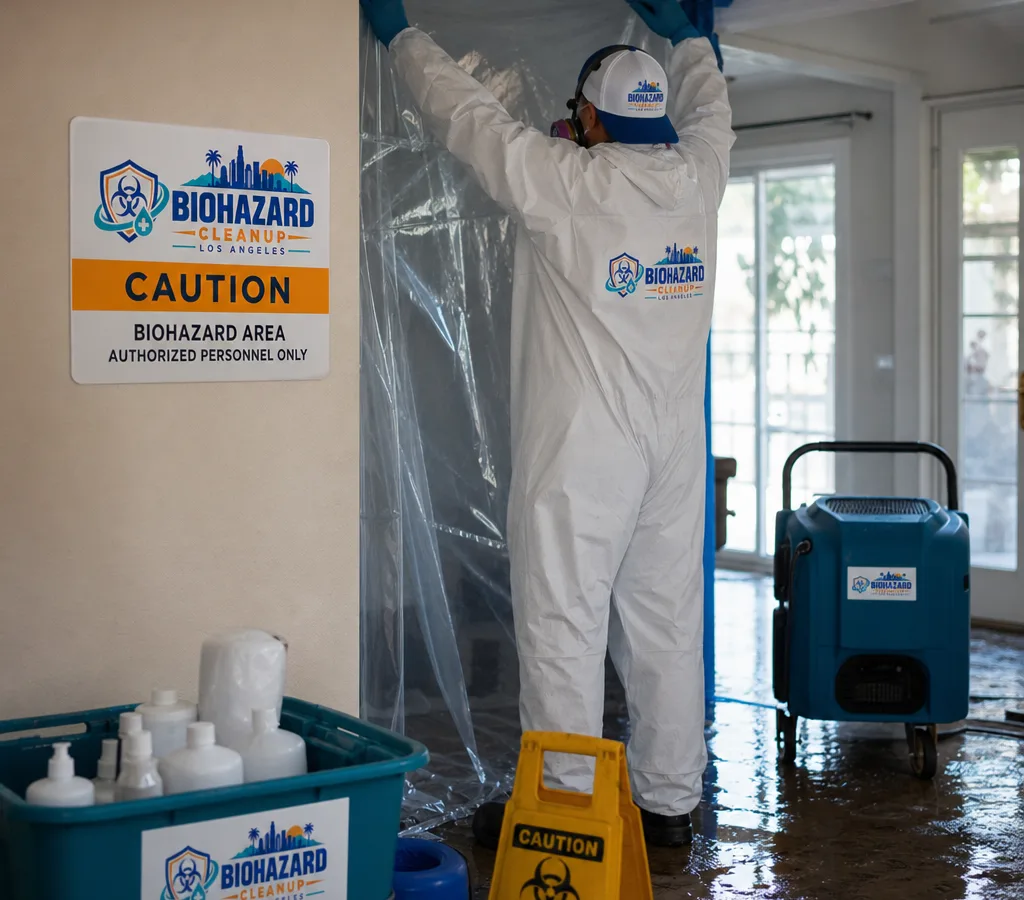
We isolate the affected area using plastic sheeting and controlled pathways so foot traffic, air movement, and tools do not carry contamination into clean rooms.
Serving Los Angeles, California & surrounding areas
24/7 Emergency Response
Sewage cleanup · Los Angeles
When a drain line backs up or a toilet overflows, you need trained technicians who can contain contamination fast, remove damaged materials safely, and return the space to a sanitary condition with documented steps.
Contaminated-water response
Sewage cleanup Los Angeles work is different from normal water damage. Sewage can contain bacteria, viruses, and other contaminants, and it can soak into flooring, baseboards, drywall, and contents quickly. The right response is part cleanup, part demolition, and part sanitizing, with careful containment so contamination does not spread to clean areas.
Biohazard Cleanup Los Angeles handles sewage backups and contaminated water incidents across Los Angeles, CA. We focus on practical next steps: stop the spread, remove affected materials, clean and disinfect, and confirm the area is ready for rebuild or re-occupancy. If you are coordinating the response for a tenant, a household, or a storefront, we can help you get a clear written scope before any work begins.
If you are looking for the company behind this service, Biohazard Cleanup Los Angeles is listed on the home and can coordinate the response start-to-finish.
A controlled restoration scope
We isolate the affected area using plastic sheeting and controlled pathways so foot traffic, air movement, and tools do not carry contamination into clean rooms.
Porous items like carpet pad, swollen baseboards, and contaminated drywall often need removal. We remove and bag materials for proper disposal based on site conditions.
We clean gross contamination first, then apply appropriate disinfectants and contact times to reach sanitary conditions on remaining structural surfaces.
After the contaminated water is addressed, we manage residual moisture to reduce the risk of secondary damage. Drying targets cavities and assemblies, not only the visible surface.
We document the affected areas, materials removed, and the steps taken. That paper trail helps keep decisions straightforward for owners, tenants, and adjusters.
Local backup risks
Sewage incidents in Los Angeles can start in a single unit and quickly affect multiple spaces, especially in older buildings with shared drain stacks. Typical triggers include mainline blockages, grease buildup in commercial kitchens, roots entering clay or aging lines, and backups after heavy use.
We work across a range of local building types. In Koreatown and Westlake, multi-unit apartments can mean a backup travels through lower units or shared plumbing chases. In Mid-City and parts of South LA, older homes may have aging drain lines that clog or collapse without much warning. In Downtown Los Angeles, mixed-use buildings often need cleanup planned around limited access, elevators, and tenant traffic.
No matter the cause, the priorities stay the same: isolate contamination, remove impacted porous materials, clean and disinfect remaining surfaces, and set the space up for a safe rebuild.
From containment to handoff
Each step controls exposure, addresses affected materials, and prepares the property for safe restoration.
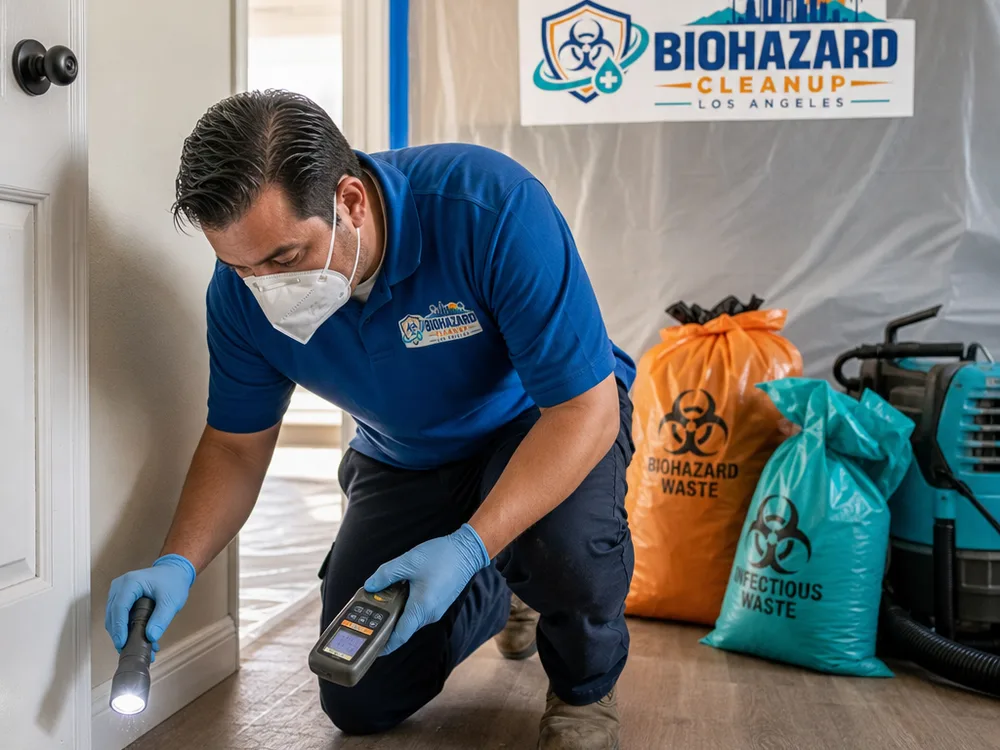
We identify the affected areas, confirm the category of water, and coordinate immediate controls such as shutting down fixtures in the impacted zone. If a plumber is needed to clear the line, we coordinate timing so cleanup can proceed safely.
We set up containment, protect clean pathways, and establish where tools, PPE, and waste will move. This matters in tight hallways, shared entries, and occupied buildings.
We extract standing water and remove materials that cannot be reliably sanitized, such as contaminated carpet pad, insulation, and affected drywall, based on inspection findings.
We clean remaining surfaces first, then apply disinfectants with proper dwell time. Attention goes to corners, fasteners, subfloor seams, and any area where splash or wicking occurred.
We place drying equipment if needed and monitor moisture conditions. At handoff, you receive a clear scope of what was done and what the next rebuild steps should address.
Clear pricing factors
Sewage cleanup in Los Angeles typically ranges from about $1,500 to $6,500+, with small, contained incidents at the low end and multi-room or multi-unit losses at the high end. A single bathroom overflow that affects only hard surfaces may be closer to $1,500 to $3,000, while sewage that soaks into carpet, pad, drywall, and cabinetry can push costs higher.
Final price depends on how far contamination spread, what porous materials must be removed, access (stairs, parking, elevator rules), required containment, and drying time. The exact scope is confirmed after an on-site inspection and moisture mapping.
Answers before you schedule
Sewage should be contained and cleaned as soon as it is safe to enter because it can wick into porous materials and spread contamination with foot traffic. If you cannot shut off the source, keep people and pets out of the area and avoid running fans that could move air from the contaminated zone into clean rooms.
In many sewage incidents, carpet pad and other porous materials need removal because they are difficult to sanitize reliably once contaminated. On-site inspection determines what can be saved based on the category of water, how long it sat, and how far it penetrated into carpet, tack strip, subfloor, and baseboards.
Sewage is contaminated water that can contain pathogens and requires stricter containment, removal of impacted porous materials, and disinfection steps. The category affects the scope, safety precautions, and how materials are handled and disposed of.
Yes. Multi-unit sewage incidents often involve shared plumbing, affected lower units, and protection of hallways and common areas, so we plan containment and work hours around residents and building rules. Documentation and a clear scope help owners and managers coordinate plumbers, rebuilding, and tenant communication.
It should when contaminated materials are removed and remaining structural surfaces are cleaned and disinfected correctly, because the odor source is usually organic contamination trapped in porous layers. Persistent odor often indicates missed saturation in subfloor seams, wall cavities, or baseboards, which is why we inspect for wicking and hidden moisture.
Keep the affected area isolated, avoid using plumbing that could worsen the backup, and do not track water through the property. If you can do so safely, ventilate to the outside and remove valuables from the edge of the affected zone, but avoid handling contaminated materials without proper PPE.
If you are dealing with a backup, get an on-site evaluation so you know what needs removal, what can be cleaned, and what the real timeline looks like before repairs start.
Call Now (213) 754-2229Help is available 24/7
Tell us what happened and where the water traveled. We will respond with a clear plan for containment, cleanup, sanitizing, and next steps for restoring the space.